
08/06/2026
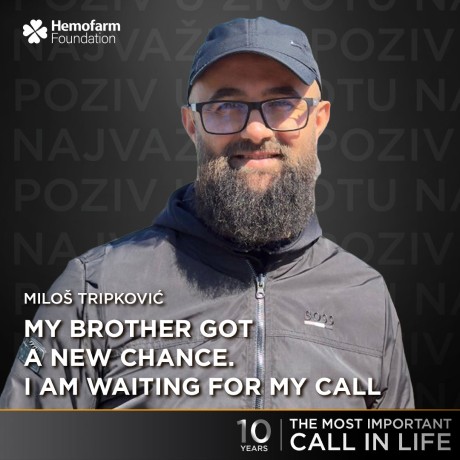
My bag is packed, I’m just waiting for the call
Miloš Tripković
My bag is packed, I’m just waiting for the call
Even as a child, I had red blood cells in my urine. Back then, the doctors thought it would go away as I got older, and for a long time it seemed like it wasn’t anything serious. However, in 2014 I did a 24‑hour urine test, and that’s when they discovered elevated protein levels. That was when I was first admitted to the Military Medical Academy, and by 2015 I’d already had a kidney biopsy and learned my real diagnosis.
Later we did genetic testing, and Alport syndrome was confirmed – a hereditary disease that affects not only the kidneys but also hearing. My older brother and I have the same condition. His story was actually my preparation for everything that was waiting for me.
Back in 2004, my brother had his first kidney transplant, with our mother as the donor. That kidney lasted eight or nine years, after which he had to go back on dialysis. Seven years later, in 2022, he got a second chance. He had a transplant in Italy. Watching him, I learned what life with this disease looks like. I knew everything in advance: the fears, the limitations, but also the most important thing – that after a transplant, a person can live a normal life again.
From the moment I found out about my diagnosis, I did my best to do everything that was up to me. The doctors told me openly that a lot depends on the patient themself, on discipline, lifestyle, and the willingness to follow the prescribed treatments and rules. They told me that some people end up on dialysis within a few months, while others manage to keep the disease under control for years.
That’s why I changed my habits. I went on a strict diet and stuck to it consistently. I didn’t eat salty food, avoided cured meats and grilled dishes. I stayed physically active, played football and basketball, worked, socialized, and lived a completely normal life. From 2015 to 2024, I managed to keep everything under control.
Still, the disease was slowly progressing. By 2017, my urea and creatinine had already started to rise. Then in 2024 my creatinine jumped to 550, and at that point it became clear that dialysis was inevitable. A fistula was implanted and preparations began for a new way of life.
Along with the kidney disease, my hearing also gradually began to weaken. First, I developed ringing in my ears, and then at work I noticed that people had to repeat the same thing to me several times. I immediately knew what it was about. I went to the doctor, got a hearing aid, and today I function normally.
I have been on dialysis since November 2024. I go three times a week – on Mondays, Wednesdays, and Fridays. I chose the third shift, which lasts until 9:30 in the evening. After dialysis I go home, have dinner, and go to bed, and in the morning I wake up rested and ready for a new day. That means a lot to me, because thanks to that I manage to live an almost completely normal life. I work every day until 4 p.m., finish all my responsibilities, go for walks, see people, and only then go to dialysis.
Many people didn’t even know I was on dialysis, because I didn’t allow the illness to close me off. Often, when people get sick, their spirits sink, they withdraw and stop living. I decided differently. By nature I’m a positive person and I keep telling myself that there are far more serious illnesses than ours.
It is hard. Dialysis ties you to one place; it restricts water, food, and freedom. But a transplant gives life back. I can see that best in my brother. Today he’s playing football again, doing sports, and living just as he did before the illness. That’s why I believe the same path awaits me.
I have already been called twice for a transplant in Serbia. The first time I didn’t go because I had a cold. I was disappointed, but I kept telling myself there was probably a reason and that kidney wasn’t meant for me.
The second time I headed to Belgrade immediately. I was on the short list together with Vladan, a man who has been on dialysis for ten years. When they chose him, I was honestly happy. I know how much it means to get a new chance after so many years of waiting. The most important thing to me was that the transplant was successful and that he feels well today.
At the moment I am on the transplant list in Serbia, and from June 1 I will also be on the list in Belarus. I have already completed all the examinations there. Through the “Budi human” (“Be Humane”) organization I raised funds for the transplant and managed to collect the money. My bag is already packed; I’m just waiting for the call. I believe my moment will come.
AUTHOR
Miloš Tripković