Healthy Love Is Calm, Stable, and Secure
In contemporary culture, love is often portrayed as fragile, temporary, and almost unattainable. We are surrounded by messages that “there is always something better,” that choice should never stop, and that emotional attachment is risky because it limits freedom. Yet the problem is not that people have “stopped loving,” but that the conditions under which they love have changed significantly.
One major shift is the rise of individualism. Identity today is built around personal goals and autonomy, while relying on others is often seen as a weakness. In such a climate, relationships can easily become an evaluation of a partner’s “value” rather than a process of growing together. Dating apps reinforce the sense of endless choice, making it easier for people to walk away at the first sign of difficulty.
As a result, infatuation and closeness are often confused. Initial passion is intense but short lived, while genuine connection is built through safety and trust. Research also suggests that love is less a spontaneous feeling and more a skill developed through communication, understanding, and compromise. That’s way, healthy love is not dramatic. It is calm, stable, and secure.
It is especially important to consider how these dynamics affect young people. In a world of instant rewards and constant evaluation, tolerance for frustration is lower and emotional resilience is harder to build. Gen Z often approaches relationships more cautiously, prioritizing security over romance, while millennials are more likely to see relationships as an investment, yet accompanied by anxiety about making the “right choice.”
In this context, the trend of reduced sexual activity among younger adults in the U.S. is not surprising. Between 2000 and 2018, sexual inactivity increased, particularly among younger men, a phenomenon often described as a “sex recession.” Less sex does not mean less need for closeness. Rather, it points to higher anxiety, caution, and delayed intimacy.
Many young people today also struggle with frustration in relationships. Growing up in relatively protected environments with constant access to quick rewards has been linked to weaker emotional resilience. In partnerships, this can show up as conflict avoidance, fear of rejection, and a tendency to withdraw at the first sign of trouble. Instead of seeing conflict as an opportunity for growth, it is perceived as evidence of incompatibility.
The digital environment can further amplify relationship insecurities. Studies show that social media jealousy is associated with greater partner monitoring and lower relationship satisfaction over time. In other words, our relationships are shaped not only by who we are, but also by how platforms encourage comparison and suspicion.
However the good news is that satisfaction in long term relationships does not have to decline. Relationships can develop along different paths, and a key differentiator is the belief that love is built through effort and shared work. Love is increasingly understood as a skill learned through communication, understanding, and compromise. Healthy love is often calm, stable, and secure, even when it does not appear as “spectacular.”
Why does all of this matter? Because the quality of our relationships is not just a romantic issue, but a mental health one. A large meta analysis of nearly 20,000 young people found that poor relationships can be associated with depression, suicidal thoughts, and self-harm, while breakups are risky but generally less harmful than staying in a chronically unhealthy relationship. In other words, what hurts most is not the end of a relationship, but living in one where we do not feel safe and seen.
Research also shows that simply having a partner does not automatically protect mental health. What truly makes a difference is the presence of support, understanding, and emotional safety within the relationship. Literature reviews confirm that relationship quality often has a stronger impact on psychological well-being than the other way around.
Authors also emphasize that although emotionally stable individuals may enter relationships more easily, it is the quality of the relationship that has a greater long-term effect on mental health. When a relationship improves, so does our well-being. Working on oneself alone, without working on the relationship, does not guarantee a better partnership. Love, therefore, is not an “add on” to life, but one of its foundations.
It is equally important to recognize that social context strongly shapes intimate relationships. Research on same sex couples shows that internalized stigma and negative societal attitudes can increase anxiety and depressive symptoms, which in turn undermine satisfaction, intimacy, and commitment. This means relationship challenges are often not merely “personal,” but reflect broader cultural and social pressures.
Taken together, these findings suggest that modern love is not necessarily weaker than before, but it is exposed to greater psychological and social strain. In a culture of rapid choice and constant comparison, relationship quality becomes a crucial protective factor for mental health. When love is secure and nurtured, it can protect, stabilize, and strengthen individuals. When it is shallow, unstable, or burdened by fear and insecurity, it can become a source of significant psychological pain.
So what is the future of long term relationships? Probably not disappearance, but diversification. Cohabitation is increasingly functioning as an alternative to marriage, with shifting expectations and cohort based patterns of stability. Technology and AI will not “replace” love, but they will reshape the landscape of intimacy. Systematic reviews are already mapping both the benefits and risks of romantic AI partners. In such a world, the question is no longer whether love is possible, but whether we are willing to slow down, tolerate frustration, and treat relationships as a practice, not a disposable product.
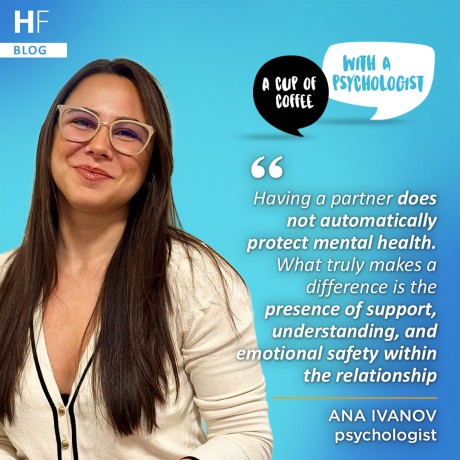
AUTHOR
Ana Ivanov
Psychologist