
16/06/2026
Six years of waiting. Hope still remains
Milena Ćosić
Six years of waiting. Hope still remains
It all started out of the blue in 2014. I was walking down the street when I suddenly felt a sharp pain in my lower back. I broke out in a sweat. It lasted maybe thirty seconds, but it was enough to frighten me. Until then, I had never had any health problems. I was a healthy woman, slight in build, and the only thing I had noticed was that I had started gaining weight around that time. I had no swelling, nothing that would have suggested there was something wrong with my kidneys.
Since the pain didn’t return for months, I thought it was something temporary, maybe the result of a cold. But then the same thing happened again in September. That was when I went to see a doctor. The test results showed a large amount of protein in my urine, although my urea and creatinine levels were still good. I was sent for further tests, and they recommended hospital treatment, but because I felt fine, I asked to have everything done on an outpatient basis.
An ultrasound showed that my kidneys had shrunk, but no one knew why. I was sent to Belgrade, where, after a biopsy, I was diagnosed with an autoimmune disease - nephrotic syndrome. I still remember that feeling of disbelief. I couldn’t accept that I was seriously ill. No one in my family had ever had kidney problems, and I knew almost nothing about the disease. Apart from my kidneys, everything else seemed fine.
For the first fifteen months, I was on therapy and went to regular check-ups. I felt well, went back to work, and lived a normal life. That continued until 2020. My creatinine levels were slowly rising, but I was still functioning as usual. I wasn’t even aware that I was actually getting closer to dialysis.
And then, all of a sudden, life changed.
In April 2020, after a severe cold and a high fever, I never truly recovered. I was exhausted, short of breath, and unable to climb even a single flight of stairs. My test results were very poor, and I was immediately admitted to the hospital. I received a blood transfusion, and that was when the doctor told me it was time to start dialysis.
That is a moment no one is ever prepared for. You are no longer the same person. You have to give up so much - your job, your freedom, your plans. At the age of 48, I went on disability pension, and I felt as though my life had come to an end.
I opted for peritoneal dialysis because it is a less aggressive option for the body. This June, it will be six years since I started living with dialysis. Over time, I have learned that it governs my days. You have to listen to your body constantly, because every person responds differently to treatment. Patients learn a great deal on their own, through experience and through conversations with others who are going through the same thing.
I also tried overnight dialysis with a machine. It meant hooking myself up in the evening and staying connected until morning. The machine worked all night, and I could hear it constantly draining and returning the fluid. At first, it seemed like a good solution because it gave me more freedom during the day, but it just didn’t work for me. After two months, I began to swell, my condition suddenly worsened, and I ended up in the hospital.
I only remember that my family rushed me there. I didn’t know where I was or what was happening to me. I wasn’t even mentally present. I spent three weeks in the hospital, mostly sleeping and trying to recover.
I am currently back on daytime dialysis, five times a day. Each session lasts about half an hour. It isn’t easy, but you get used to it because you know there is no life without dialysis. There are days when I feel stronger, when my hemoglobin is good and I feel almost normal. And then there are the other days, when my body reminds me just how hard all of this really is.
In six years on the waiting list, I have received only one call for a transplant. Nine of us were called at that time, and two men who were a better match got the kidneys. I remember that just two days earlier, I had called to check whether I was even still on the list, because I had almost lost all hope.
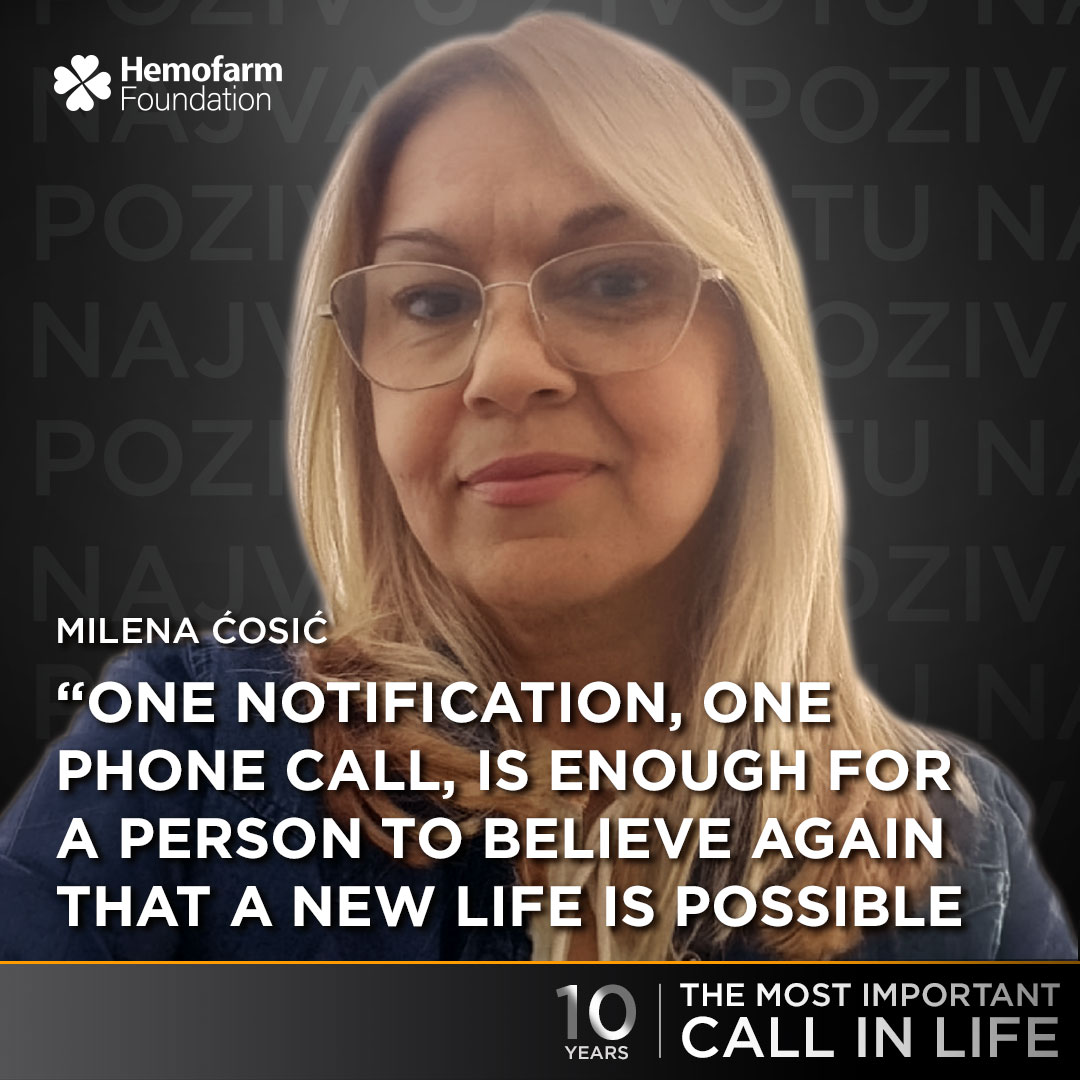
For the first three years, I truly believed a transplant would come quickly. Later, when you see how few transplants are actually performed, you begin to understand the reality and learn not to expect too much. And yet, deep down, hope remains. All it takes is one piece of news, one phone call, for a person to believe again that there is a chance to get a new life.
AUTHOR
Milena Ćosić